
Robotics & Physical AI
Humanoid robotics, Physical AI, intelligent actuation, perception and autonomous control for next-generation robotic systems.
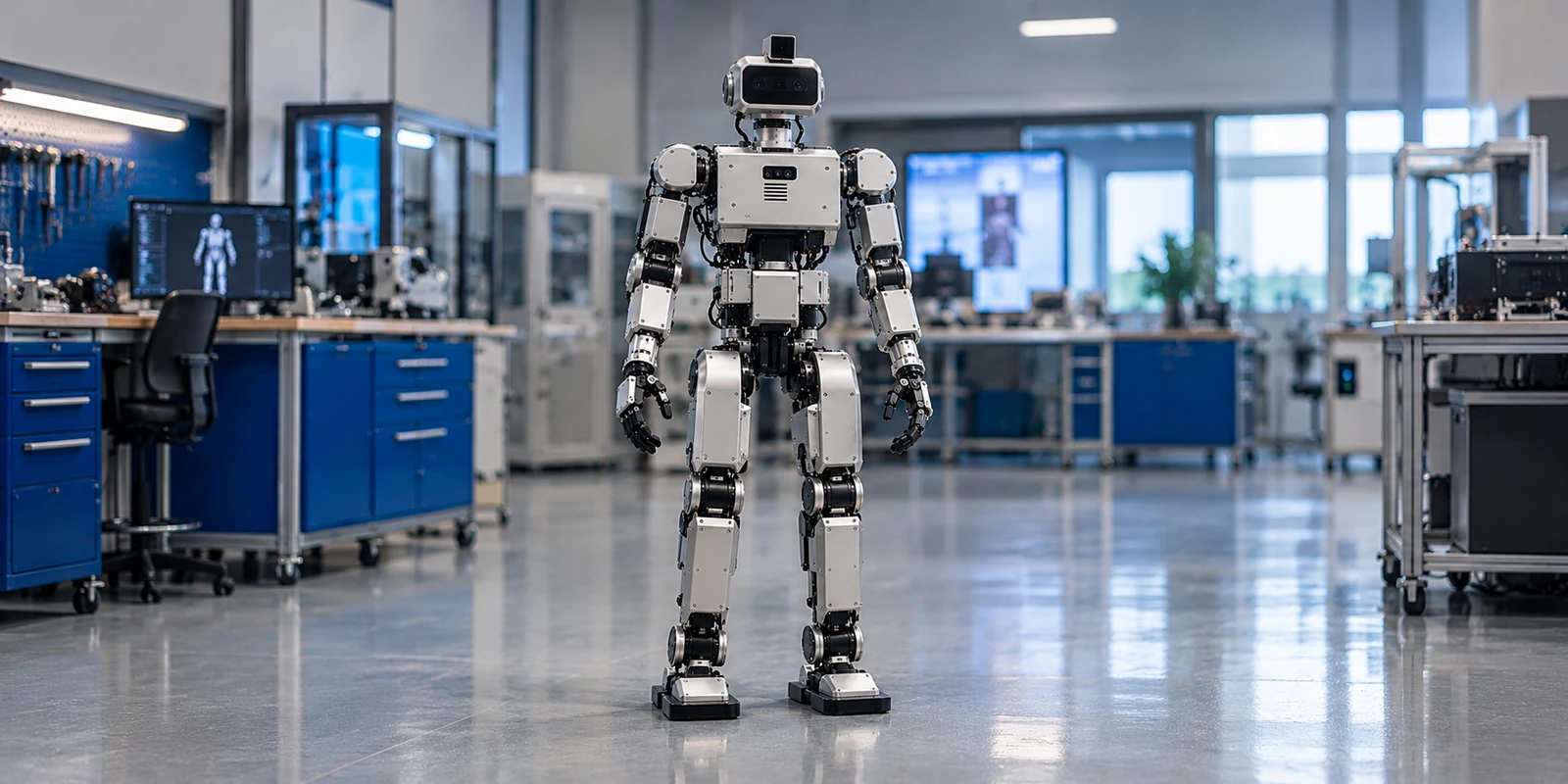
Overview
RTS is expanding into Robotics & Physical AI by building on its existing strengths in control electronics, embedded systems, electromechanical actuation, power electronics, sensing, RF communication and precision engineering. The division is focused on developing intelligent robotic platforms that can perceive their surroundings, make decisions and physically interact with real-world environments.
The long-term technology focus spans humanoid robotics, embodied intelligence, robotic joints and actuation, manipulation and dexterity, autonomous mobility, perception and sensor fusion, edge AI, human-robot interaction and service robotics. By combining AI-driven intelligence with dependable hardware, motion control, embedded computing and system integration, RTS aims to develop scalable robotic technologies for industrial, defence, commercial and future domestic applications.
Robotics & Physical AI Capabilities
Humanoid Robotics & Mechatronics
Humanoid Robot Architecture
Development focus on integrated humanoid architectures combining mechanical structure, distributed control, sensing, actuation, onboard computing and system-level coordination.
Robotic Joints & Actuation
Development of compact joint-actuation systems combining motors, servo control, transmission mechanisms, feedback sensing and embedded drive electronics for precise robotic motion.
Robotic Manipulation & Dexterity
Robotic arms, grippers, end-effectors and manipulation technologies for object handling, positioning and increasingly dexterous task execution.
Locomotion & Mobility
Motion-control, balance, gait and mobility technologies for legged, wheeled and other robotic platforms operating across real-world environments.
Physical AI & Autonomous Intelligence
Physical AI & Embodied Intelligence
AI architectures that connect perception, reasoning and physical action, enabling robotic systems to understand, learn from and interact with their environment.
Perception & Sensor Fusion
Integration of cameras, depth sensors, LiDAR, radar, IMUs, force sensing and other sensing technologies to build robust environmental awareness.
Autonomous Planning & Decision-Making
Development focus on task planning, navigation, obstacle avoidance, behavioural decision-making and autonomous execution for intelligent robotic systems.
Edge AI & Robotic Computing
Onboard AI processing, embedded computing and real-time control architectures for low-latency perception, decision-making and robotic control.
Human-Robot Interaction & System Integration
Human-Robot Interaction
Interaction technologies combining sensing, interfaces and intelligent control to enable robots to understand commands and operate naturally alongside people.
Service & Domestic Robotics
Development focus on robotic systems for assistance, inspection, handling, maintenance and repetitive tasks across homes, workplaces and commercial environments.
Teleoperation & Shared Autonomy
Remote-operation and shared-control architectures that combine human supervision with autonomous robotic functions for complex or safety-critical tasks.
Power, Connectivity & System Integration
Integration of battery and power-management systems, motor-drive electronics, communication links, embedded control, sensing and mechanical subsystems into complete robotic platforms.