
Closer collaboration between DRDO, private industry, MSMEs and start-ups is creating new pathways for defence technologies to move from research and development into qualified, scalable manufacturing.
India’s defence technology ecosystem is gradually moving toward closer collaboration between research organisations and industry.
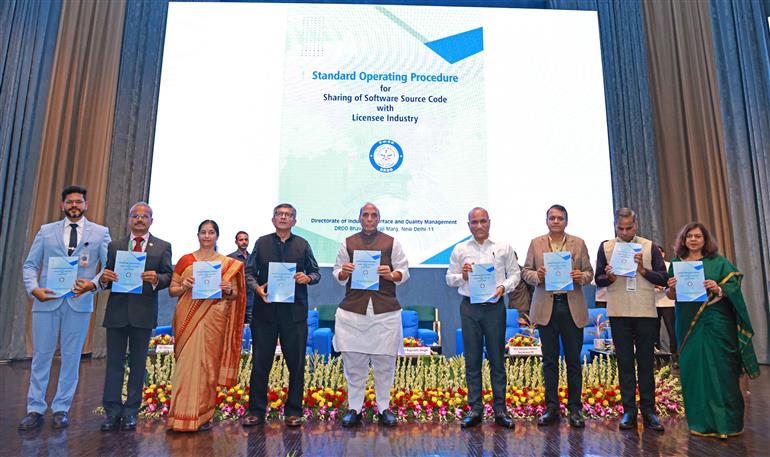
A recent example came at VIMARSH 2026, the DRDO–Industry Synergy Meet held in New Delhi on September 15. New initiatives announced at the event included direct funding and incubation support for eligible MSMEs and deep-tech start-ups, greater access to DRDO testing facilities and a framework for sharing DRDO-developed software source code with licensed industries. Press Information Bureau The event also saw nine Licensing Agreements for Transfer of Technology provided to 13 manufacturing partners, illustrating the increasing role of industry in taking technologies from development towards production.
Technology transfer, however, involves considerably more than simply handing over drawings or documentation.
Successfully industrialising a defence technology can require knowledge of specialised manufacturing processes, materials, software, calibration, testing procedures, quality requirements and system-level performance. The manufacturing partner must then translate that knowledge into a repeatable production process.
Another important development is the growing involvement of industry earlier in the technology lifecycle. At VIMARSH, the government called for collaboration extending across research, design, testing, certification and manufacturing, rather than limiting private companies to production after a technology has already been developed.
Access to testing infrastructure is particularly important for smaller engineering companies. Establishing facilities for environmental, vibration, EMI/EMC, RF and other specialised tests can require substantial investment. Wider access to existing defence testing infrastructure can help reduce this barrier.
The introduction of a framework for sharing software source code is also notable. Modern defence systems increasingly combine specialised hardware with embedded software, digital control, communications, signal processing and autonomy. Technology transfer must therefore increasingly consider both hardware and software.
As these mechanisms mature, the relationship between laboratories and manufacturers can evolve from a conventional buyer-supplier model toward a broader technology partnership. For India's defence industry, the longer-term opportunity is not simply to manufacture transferred technologies, but to develop the engineering capability required to absorb, improve and ultimately create new technologies independently.